

Back to New Tab
Pfizer Medical Affairs Chief On Embracing 'Business Unusual' for AI in Healthcare
CXO Spotlight
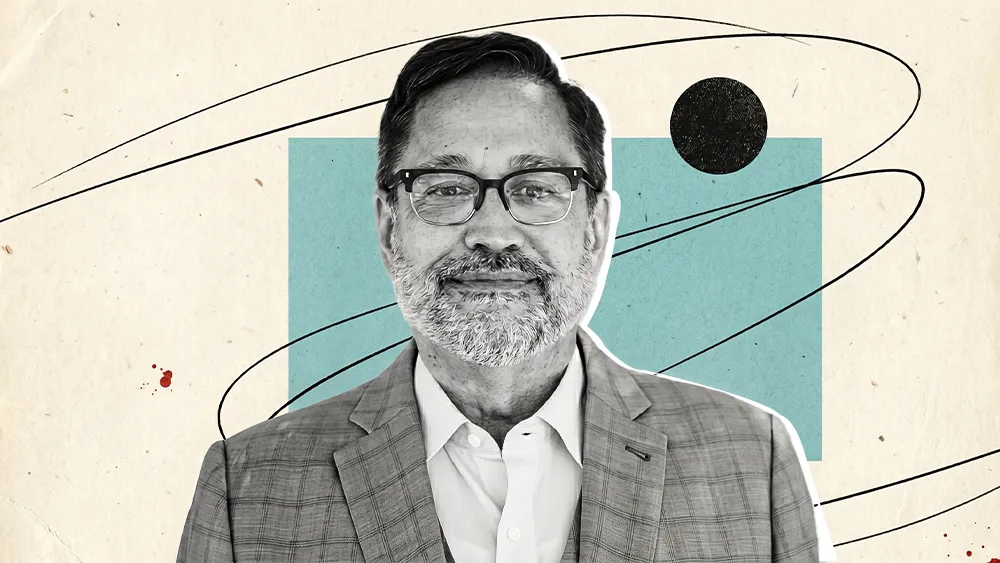
Alex Condoleon, Chief Medical Affairs Officer of Medical Engagements & Impact at Pfizer, explains the real value of AI for amplifying human intelligence, agility, and creativity.
Make New Tab News one of your go-to sources on Google


We need to be in a 'business unusual' mode, where we are willing to move before we've mastered control of a topic. In this era, there is a greater risk in not moving at all.
*All opinions expressed in this piece are those of Alex Condoleon, and do not necessarily reflect the views of his employer.
Productivity is the singular focus dominating most enterprise AI playbooks today. Now, some experts say this narrow perspective is a strategic miscalculation. Instead of automating workflows, the real transformation is about challenging leaders to rethink how strategy, care, and culture intersect.
Alex Condoleon, the Chief Medical Affairs Officer of Medical Engagements & Impact at Pfizer, frames AI as a catalyst for cultural elevation. With experience including roles as an Entrepreneur-in-Residence at Yale Ventures and a presenter at Columbia University’s Healthcare Innovation & Technology Lab, he has spent years at the forefront of this shift. As a physician executive with a track record of leading digital transformation at global life sciences firms like Sanofi, Condoleon has a direct line of sight into the future of healthcare.
The tendency to view AI through the narrow lens of automation is a critical error, he says. For Condoleon, the real opportunity is in embracing AI as a strategic lever that amplifies human capability. "AI is more than a summarization tool. It's something you can engage with to build your ideas. It has both a creative and an emotional element. It can even signal how different audiences might be feeling."
Business unusual: AI can empower teams to operate in a mode characterized by speed, boldness, and a profound understanding of the human element, he explains. But first, leaders must abandon the traditional priorities of certainty and control. "We need to be in a 'business unusual' mode, where we are willing to move before we've mastered control of a topic. In this era, there is a greater risk in not moving at all."
Nowhere is this human-centric approach more potent than in healthcare, Condoleon says. Here, AI presents a paradox: more technology can actually foster deeper human connection.
The 5% mistake: The most untapped value lies in making AI an amplifier for employee contributions, not a replacement, Condoleon says. "If we see AI as just a way to drive productivity and replace the workforce, we are probably capturing only 5% of the value in front of us."
Decreased reliance on technology: Envisioning a future where AI handles the administrative burden that consumes physicians' time, Condoleon describes how it might help them reconnect with their patients. "There's hope that with technology, we're going to see a decreased reliance on technology."
The empathy amplifier: With technology acting as an analytical partner, for instance, physicians could identify subtle emotional or psychological cues in a conversation that usually go unnoticed, he explains. "AI has the opportunity to interpret the conversation and help discover health issues that might have otherwise been missed. That's a win-win for everyone involved."
But this new reality also demands a different kind of leadership, according to Condoleon. In an era where societal adoption of technology outpaces corporate roadmaps, the old rules of controlled progress are obsolete. Instead, success now belongs to leaders who prioritize learning agility and courage over mastery and certainty.
Refining, not outsourcing: When leaders leverage AI, they enter collaborative sessions better prepared. That elevates creative potential for the entire team, he explains. "I'm not outsourcing my ideas. I'm refining and improving them with AI. That process gets me multiple steps ahead before I bring it back into the human environment for true creative amplification."
The new success formula: Competitive advantage is no longer defined by technology in this environment, Condoleon says. It's driven by leadership's ability to facilitate cultural change and new organizational skills. "The winners are the organizations and leaders who learn at speed, load their organizations with new capabilities, and apply those capabilities to unlock value."
Ultimately, Condoleon’s message is a profound challenge for leaders. Differentiation in the age of AI will not come from the best algorithm, but from a culture of trust and collective growth where technology elevates human potential. "Heartset and mindset are what will differentiate the winners and losers. If you can't get your people on board and navigate change in a way that brings value to everyone, employees, customers, and stakeholders, then you're leaving value on the table."
Still, the path forward doesn't require a perfect plan, Condoleon concludes. "There is no rulebook for how we lift together with AI. But that lift will need to apply to leaders just as much as it will to teams. It will take intense curiosity, learning agility, and a real commitment to an agile and adaptable culture."